
Wealth – How To Make Wealth – Paul Graham
Paul Graham wrote "Wealth" in May 2004. It is the clearest explanation of how wealth actually works - what it is, how it gets created, and how startups compress an entire working life into a few years of extraordinary effort. Twenty years later, it has not been improved upon. Every founder should read it before they start anything.
The core insight: wealth is not money. Wealth is stuff people want. Money is just a medium of exchange - a way of moving wealth around. When you make something people want, you create wealth. When you make something people don't want, you destroy it. The pie is not fixed. Wealth is created and destroyed. Understanding this distinction changes everything about how you think about business and your career.
The Startup as Compressed Working Life
Graham's economic proposition: instead of working at low intensity for forty years, a startup compresses that into four years of maximum effort. The multipliers compound - working twice as many hours, three times as productively per hour, without the drag of a pointy-haired manager, and leveraging your intelligence beyond what a job description expects. The math gets you to something like 36x productivity. That's not a precise number - but the structure is real. You are not 36x smarter than your corporate peer. You are 36x less impeded.
The conservation law: if you want to make a million dollars, you have to endure a million dollars' worth of pain. You don't evade the law - you compress the timeline. Starting a startup buys pain in bulk. There's a discount for buying economy-size pain, but the fundamental equation doesn't change.
Measurement and Leverage
To get rich, you need two things simultaneously: measurement (your performance can be tracked and rewarded directly) and leverage (your decisions have outsized impact). A factory pieceworker has measurement but no leverage. A lead actor has both. A CEO has both. A great software engineer at a startup has both. That's why startups work - they are small enough to measure individual contributions and technology is the ultimate leverage, because the solution scales to everyone who uses it.
A good hint to the presence of leverage: the possibility of failure. Upside must be balanced by downside. If your job feels safe, there is probably no leverage - and therefore no path to extraordinary reward. The sword hangs over the CEO, the athlete, the fund manager, the founder. That's not a bug. That's the mechanism.
Technology as Leverage
What is technology? It is technique - a better way of doing things. When you discover a new way, its value is multiplied by every person who uses it. That is the proverbial fishing rod rather than the fish. A restaurant serves one customer at a time. A piece of software serves everyone who needs it, simultaneously, forever. That asymmetry is why technology startups generate the kind of wealth they do, and why they attract the best people who want to work as hard as they can and get paid proportionately.
Graham's rule of thumb from building Viaweb: run upstairs. If you're a nimble company being chased by a slow, large one - always take the harder problem. The bully can probably follow you downstairs as fast as you can go. Upstairs, their bulk is a disadvantage. Use difficulty as a guide, not just in choosing what to build, but at every decision point along the way. Hard problems have lower competition and higher barriers to entry.
The Pie Fallacy
Most people carry from childhood the assumption that wealth is fixed - that if someone gets more, someone else gets less. This is true of money in a single bank account. It is not true of wealth in the world. Wealth is created. A programmer who writes software that solves a real problem has made the world richer without making anyone else poorer. A craftsman who restores a car has created wealth. Scientists who discover penicillin have created wealth. The pie grows. If you're starting a startup, you are by definition planning to disprove the Pie Fallacy - to make something that didn't exist before, and make the world better by that amount.
Wealth and Power
For most of human history, the primary way to get rich was through inheritance, marriage, conquest, or theft. Startups are only possible because of the rule of law - the guarantee that if you make a fortune, someone with a sword won't simply take it. The Industrial Revolution happened because people who made fortunes were able to enjoy them in peace. The same recipe that makes individuals rich makes countries powerful. As Graham puts it: let the nerds keep their lunch money, and you rule the world.
Should You Go To Silicon Valley? – Paul Graham
BotBotBest's founder worked in Silicon Valley for over 15 years - and saw firsthand what Graham describes here. In 2022 he consulted for Candela Boats, a Swedish electric foiling boat company, in San Francisco / Sausalito.
Graham's case: when there is something people are working on intensely, there is always one place in the world. Painting in 1870 - Paris. Math in 1900 - Gottingen. Movies in 1950 - Hollywood. Startups right now - Silicon Valley. Every ambitious person working on those things at those times had the same question: should I go there? And the answer is always the same. Yes.
What you get is the best peers, in larger numbers, in higher concentration. And the serendipitous meetings. Graham can't fully explain why unplanned meetings seem to produce better outcomes than planned ones - but the data is clear that they do. In the big centers, there are simply more of them. You bump into the people who change everything. You can't schedule that.
The biggest advantage is what it does to you, not for you. When you move to a big pond, you can measure yourself against the real fish. And the news is surprisingly often good. You see someone like Brian Chesky or Sam Altman and think: he's not a different species from me. I could do what he did if I worked that hard. It's not that the summit disappears - it's that for the first time, you can see it clearly. High, but not impossibly high. For an ambitious person, there is nothing better than a high but definite threshold.
The pay-it-forward culture of Silicon Valley is real and distinct. People help each other for no reason - or rather, for reasons that have been baked into the culture over 60 years until they no longer feel like reasons. They just feel like how people act. Ron Conway does favors all day long and doesn't keep track of whether he's ahead or behind. That's the model. When enough people operate that way, there is no longer a conservation law for favors. There are just more favors.
Candela Boats – Swedish Innovation Meets Silicon Valley
In 2022, the BotBotBest founder worked in San Francisco / Sausalito consulting for Candela Boats - a Swedish company building electric hydrofoil boats that fly above the water on foils, using a fraction of the energy of traditional vessels.
Candela is a perfect example of technology as leverage. A better way of moving through water - one that consumes 80% less energy than a conventional boat of the same size.
Related Articles
 Books, Business, Career
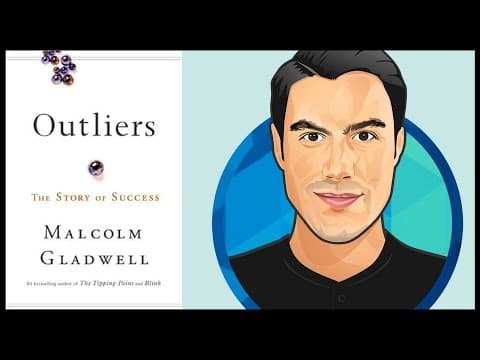
Outliers: The Story of Success
Malcolm Gladwell's 10,000 Hour Rule: it takes approximately 10,000 hours of deliberate practice to achieve mastery. The book explores why the most successful people in the world achieved what they did.
 Books, Business, Career
Must Read Books
The definitive reading list for anyone serious about success, business, and self-mastery. From the Bible to Napoleon Hill to Ray Dalio — these are the books that change lives.
 G.O.A.T., Music
To Be The Best – Tenacious D – The Best Band In History. FACT.
BotBotBest — Best Of The Best Of The Best — is often used to describe those who have achieved the pinnacle of success. Tenacious D makes their case.