
Walden - Don't Waste Your Life - Live Deliberately, Live Simply, Focus
Henry David Thoreau went to Walden Pond alone, for two years, because he wanted to live deliberately. Not to escape life - to confront it directly. He wrote: "The mass of men lead lives of quiet desperation. What is called resignation is confirmed desperation. From the desperate city, you go into the desperate country and have to console yourself with the bravery of minks and muskrats. A stereotyped but unconscious despair is concealed even under what are called the games and amusements of mankind. There is no play in them, for this comes after work. But it is a characteristic of wisdom not to do desperate things."
Most people never ask the question. They inherit a life - inherit a religion, a career, a worldview, a set of habits - and live it out without examination. Freud said it plainly: "Most people don't live. They are merely lived by their instincts and passions." The unexamined life is not worth living. Socrates said the same thing two thousand years earlier. It has always been true.
Don't waste your life. If you're young, you have the opportunity to do something valuable. You can listen to the Call and follow the spiritual path on your own Hero's Journey. But not everything will be sunshine. Life is full of temptations, false promises, and direct resistance - even from people close to you. The spiritual path can be a lonely one. But above all, it is worth it.

1. LIVE DELIBERATELY
Thoreau's point was not that you should move to a pond. It was that most people never choose their life - they drift into it. They do what is expected, what is familiar, what requires the least resistance. Living deliberately means interrupting that drift. It means making conscious choices instead of letting your habits, your fears, and your social environment make them for you.
Your life is the sum of your decisions - not your intentions, not your feelings, not what you say you believe. The actual decisions, made moment by moment, mostly without awareness. The first step is to become aware of them as you make them. That awareness alone changes everything.
2. ASK WHY - AND BE TRUTHFUL
Awareness of a decision is not enough. You also have to ask why you made it - and be honest about the answer. Most people construct intellectually respectable reasons for choices that are really driven by fear, comfort, or desire for approval. The noble reason is the cover story. The real reason lives underneath it.
Rationalization is the enemy of good decisions. It happens automatically, below the level of consciousness, and it is nearly impossible to catch without the habit of asking why repeatedly and being willing to accept an unflattering answer. The examined life starts here.
3. FIND TEACHERS, FIND COMMUNITY
You cannot see yourself clearly. No one can. Distance gives perspective that proximity cannot. The people around you can see patterns in your behavior that are completely invisible to you - the same way someone outside a situation sees it more clearly than the person inside it. Teachers and community exist to give you that perspective.
We accept coaching and correction readily for our bodies, our skills, our careers. We resist it for our character - the thing that matters most. The resistance is not accidental. We avoid teachers because teachers bring accountability, and we don't want to be held accountable. Any spiritual framework that asks nothing of you, judges nothing, and holds you to no standard is giving you what you want, not what you need.
4. AIM PAST THE TARGET
Living deliberately means choosing growth over comfort - repeatedly, over a lifetime. That almost always means doing things that look irrational from the outside: leaving a secure position for an uncertain one, moving toward what you don't know instead of what you do, choosing discomfort over safety.
The countercultural nature of this is not a side effect - it is the signal that you are doing it right. If every choice you make makes sense to everyone around you, you are probably not making your own choices. The people who live most fully are almost always swimming against something.
5. IDENTIFY YOUR BLIND SPOT
Everyone has a central flaw - a pattern of thinking or behavior that limits them - that they cannot see directly because they are too close to it. All their defenses exist to protect it. When someone tells them about it, the defense activates and they reject the feedback. The very act of pointing it out triggers the mechanism that hides it.
This is why you need other people. One person pointing out your blind spot is easy to dismiss. Ten people independently pointing out the same thing is much harder to ignore. The goal of a good community is to create enough trust and honesty that the truth can reach you even when your defenses are up.
SPIRITUALITY WILL ALIENATE YOU - IT'S WORTH IT
Choosing to live consciously and deliberately puts you out of step with most people around you - not because they are bad, but because most people are running on autopilot. The gap between you and them becomes real and grows over time. Thoreau felt it at Walden. Every serious person who has pursued this path has felt it.
This is the cost. It is also proof you are doing something real. The alternative is the quiet desperation Thoreau described - the life that looks fine from the outside and feels hollow from the inside. The alienation of living deliberately is temporary. The regret of not living deliberately is permanent.
CONTENTMENT IN ALL CIRCUMSTANCES - PHILIPPIANS 4
"I am not saying this because I am in need, for I have learned to be content whatever the circumstances. I know what it is to be in need, and I know what it is to have plenty. I have learned the secret of being content in any and every situation, whether well fed or hungry, whether living in plenty or in want. I can do all this through him who gives me strength." - Philippians 4:11-13
Paul wrote this from prison. Not from a comfortable study after a successful career. From prison. Contentment is not a circumstance - it is a practice. You learn it the same way Thoreau learned to live deliberately: by choosing it, consciously, every single day. Through him who gives strength.
TAKE NOTHING FOR THE JOURNEY - LIVE SIMPLY
When Jesus sent out the twelve apostles, he told them to take nothing for the journey - no walking stick, no bag, no food, no money, no extra shirt. Travel light. Move fast. Trust God to provide through the people you meet. Accept hospitality. Shake the dust off your feet and move on from places that don't receive you.
"Take nothing for the journey - no staff, no bag, no bread, no money, no extra shirt. Whatever house you enter, stay there until you leave that town. If people do not welcome you, leave their town and shake the dust off your feet as a testimony against them." - Luke 9:3-5
This is radical simplicity. Not poverty for its own sake - but freedom. The freedom to move, to serve, to focus entirely on the mission without the weight of possessions, status, and security pulling you back toward the Ordinary World. Thoreau's two years at Walden Pond was the same impulse: strip away everything unnecessary and find out what is actually essential.
Live deliberately. Live simply. Focus. Don't waste your life.
Related Articles
 Books, Business, Career
Outliers: The Story of Success
Malcolm Gladwell's 10,000 Hour Rule: it takes approximately 10,000 hours of deliberate practice to achieve mastery. The book explores why the most successful people in the world achieved what they did.
 Books, Business, Career
Must Read Books
The definitive reading list for anyone serious about success, business, and self-mastery. From the Bible to Napoleon Hill to Ray Dalio — these are the books that change lives.
 Books, Career, Ordinary World
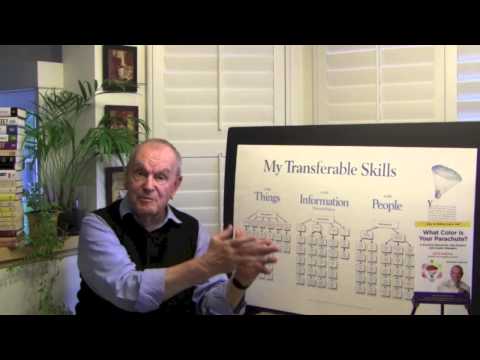
Don't Waste Your Life – What Color Is Your Parachute – Finding Your Mission In Life
One week spent doing the exercises in this book can literally save 5, 10, 20, 30 years of getting the wrong degree and wasted student loans. Find your mission.