
Vision, Goal & Scaling
Walt Disney had a vision. A theme park where families could experience joy together - clean, magical, unlike anything that existed. When he described it to his team, he pointed at 160 acres of orange groves and bean fields in Anaheim, California. That's what the vision lived in for years: an idea and a barren field. Disneyland opened in 1955. It changed the world.
Vision precedes everything. Before the work, before the plan, before the funding - there has to be a clear picture of what does not yet exist. Dr. Benjamin Hardy has built his entire body of work around this insight, and the research backs it up: the clearest predictor of where you end up is the specificity and boldness of the future self you are working toward.
10x Is Easier Than 2x: How World-Class Entrepreneurs Achieve More by Doing Less
Co-written with Dan Sullivan, this book makes a counterintuitive argument: 10x goals are easier to achieve than 2x goals. A 2x goal means doing roughly the same things better. A 10x goal requires a completely different approach - which means you stop doing 80% of what you are currently doing and go all-in on the 20% that could actually get you there. The 10x filter eliminates everything that doesn't matter. The 2x filter doesn't force that clarity.

The Science of Scaling: Grow Your Business Bigger and Faster Than You Think Possible
Change does not have to be slow. Hardy's research shows that transformation happens when a person makes a committed decision - not when they try a little harder over time. The environment, the identity, and the commitment must all shift together. That is rapid transformation: not incremental improvement but a fundamental change in who you are and what you are committed to.

The Gap and The Gain: The High Achievers' Guide to Happiness, Confidence, and Success
Most high achievers measure themselves against an ideal - an imagined perfect version of what they could be, could have done, should have accomplished. That gap between where you are and where you think you should be is a source of chronic dissatisfaction. Hardy and Sullivan call it "living in the gap." The alternative is "living in the gain" - measuring backward, from where you started. The same distance looks completely different depending on which direction you face. This book teaches you to face the right way.
Elon Musk's vision to make humanity multi-planetary is the same structure as Disneyland: an idea and a barren field. SpaceX was laughed at. The vision was too big. The rockets kept blowing up. But the vision was specific, bold, and non-negotiable. That is the template. Start with the vision. Everything else follows.

The Generalist Edge: Happy Accidents, Outward Focus & Selling Before You Build
He started two companies on $2,500 and a plan that said "We're smart guys. We'll figure something out." Most people have an idea and then start a company. He started a company and then looked for the idea. The most important thing you can do is put yourself in play.
Happy accidents are a strategy. You bump into the people who buy your company at trade shows and conferences. The way to increase the probability of happy accidents is by having an outward focus - knowing more people, being in more rooms, being curious about more things.
The CEO's job is sales. Lou Mobly (who founded the IBM Executive School) put it plainly: managers get things done. Leaders decide the things worth doing in the first place. If you're doing the wrong thing, you should be less efficient. The distinction: manage inward, lead outward.
Rockefeller's rolodex. Asked the secret to his success, David Rockefeller picked up his rolodex - 500 cards. "This is the secret." It's who you know. Everything in life is who you know.
Your product becomes a feature. What kills technology companies is not direct competition - it's someone turning your product into a feature in a larger product. Da Vinci Systems built email. Microsoft made it a feature in Office. Aim past the target: always ask what is the bigger thing that makes yours just a subset.
Generalists connect dots specialists can't. His office had no business books - he used philosophy, spirituality, and psychology instead. Creativity is a function of analogy. The more raw material crashing together in your head, the better your analogies become. He closed a deal with a hard-nosed Turkish executive by knowing about Suleiman the Magnificent. You need general knowledge because a butterfly in Africa might put you out of business.
Sell the MVP before you build it. Advertise a pre-market version. Dollar votes only - people say yes to anything on a phone call, but cash changes the conversation. Action bias: get out and find out if there's a market before you build the product. UPI went bankrupt three times building and hoping they'd come.
Decision-making is a learnable skill. Make decisions, track them, find out if you were right, correct when wrong, repeat. He didn't set out to be rich - he set out to be wise. Because once you're wise, all the other decisions follow. Wisdom is the Swiss Army knife.
Disneyland: Vision to Reality
10x Thinking
The Science of Scaling
Elon Musk: Mars Vision
Related Articles
 Books, Business, Career
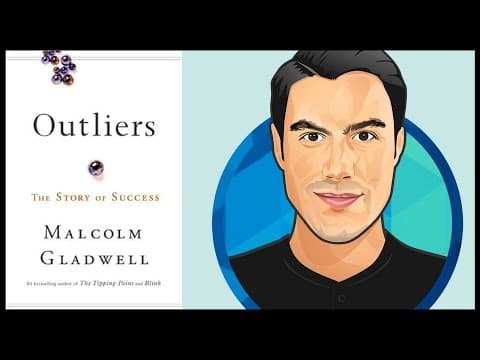
Outliers: The Story of Success
Malcolm Gladwell's 10,000 Hour Rule: it takes approximately 10,000 hours of deliberate practice to achieve mastery. The book explores why the most successful people in the world achieved what they did.
 Books, Business, Career
Must Read Books
The definitive reading list for anyone serious about success, business, and self-mastery. From the Bible to Napoleon Hill to Ray Dalio — these are the books that change lives.
 G.O.A.T., Music
To Be The Best – Tenacious D – The Best Band In History. FACT.
BotBotBest — Best Of The Best Of The Best — is often used to describe those who have achieved the pinnacle of success. Tenacious D makes their case.