
Perception Is Not Reality. You must unlearn what you have learned.
Everything you believe about the world was given to you by someone else. Your parents, your teachers, your culture, your media. Most of it you have never questioned. Most of it you took as given. That is the matrix you are living inside - not the movie, but the actual web of unexamined assumptions that shapes every decision you make.
Yoda said it plainly: "You must unlearn what you have learned." Not because what you learned was necessarily wrong - but because you cannot grow beyond the limits of your current mental model until you are willing to examine it. Perception is not reality. But it becomes your reality - and that is the trap.
The Socratic Method, Stoic philosophy, and the world's great wisdom traditions all point to the same truth: the examined life begins with the willingness to question what you think you know. Start there.
An Epiphany of Consciousness
Joseph is 3 years and 3 months old. Since birth, he has been convinced - absolutely convinced - that getting his nails trimmed is painful. Every week, same story: tears, resistance, full-blown anxiety before the clippers even come out.
In the video below, his father tries something different. Instead of telling Joseph it doesn't hurt, he asks him. Over and over. "Does it hurt?" Joseph keeps crying. His father keeps asking, patiently, calmly - using the question as a lever to pull Joseph's attention away from his fear and toward the actual physical reality. Baby Yoda watches silently from the background.
Then it happens. A moment of clarity. Joseph stops. Thinks. And says... "No."
His father's response: "I got you with the Socratic Method, huh?" Joseph: "Yeah."
Three years of weekly trauma. Dissolved in a single honest question. That's the power of perception - and the power of being willing to examine it. LOL
No different. ONLY different in your mind. You must unlearn what you have learned.
Perception Is Not Reality
Just because you think something is reality doesn't make it reality.
Excerpt Below From Psychology Today
We hear it all the time, in the business world, in the political arena, in marriages, anytime there is a disagreement or conflict: "Perception is reality." This aphorism is often used to justify a perception that may be objectively unjustifiable or just plain out of touch with reality. It's employed as a cudgel to beat others into accepting someone's preferred so-called reality. At a more philosophical level, this adage creates a sense of relativism (think squishiness) in circumstances that are more likely absolute (think "the world is flat").
Let me state with an absolute sense of reality and without any perceptual flexibility at the outset that perception is NOT reality.
Clearly, perception and reality have very different meanings. The former occurs entirely in the mind in which mental gymnastics can turn any belief into reality. The other exists completely outside of the mind and can't be easily manipulated. To conflate perception with reality is to reject the Enlightenment and harken back to the Middle Ages.
Perception is not reality, but, admittedly, perception can become a person's reality (there is a difference) because perception has a potent influence on how we look at reality.
Perception Is Not Reality
The Socratic Method
What is the Socratic Method? Developed by the Greek philosopher, Socrates, the Socratic Method is a dialogue between teacher and students, instigated by the continual probing questions of the teacher, in a concerted effort to explore the underlying beliefs that shape the students views and opinions.
The Socratic Method In Debate
What Is The Opposite Of The Socratic Method?
Suffering Is Perception
What does the Buddha believe about suffering?
According to the Buddha, our reaction [to pain] is equivalent to being shot by a second arrow. We can call this second arrow suffering. Suffering arises because when we experience pain we typically react by lashing out, at ourselves and others. We believe somehow that this will dispel or mitigate the pain.
Jesus said "Do Not Worry"
25 "Therefore I tell you, do not worry about your life, what you will eat or drink; or about your body, what you will wear. Is not life more than food, and the body more than clothes? 26 Look at the birds of the air; they do not sow or reap or store away in barns, and yet your heavenly Father feeds them. Are you not much more valuable than they? 27 Can any one of you by worrying add a single hour to your life?
28 "And why do you worry about clothes? See how the flowers of the field grow. They do not labor or spin. 29 Yet I tell you that not even Solomon in all his splendor was dressed like one of these. 30 If that is how God clothes the grass of the field, which is here today and tomorrow is thrown into the fire, will he not much more clothe you - you of little faith? 31 So do not worry, saying, 'What shall we eat?' or 'What shall we drink?' or 'What shall we wear?' 32 For the pagans run after all these things, and your heavenly Father knows that you need them. 33 But seek first his kingdom and his righteousness, and all these things will be given to you as well. 34 Therefore do not worry about tomorrow, for tomorrow will worry about itself. Each day has enough trouble of its own." — Matthew 6:25-34
The Daily Stoic: 366 Meditations on Wisdom, Perseverance, and the Art of Living
Related Articles
 Battle, Sports
Adversity. God will not have His work made manifest by cowards.
God will not have His work made manifest by cowards. Never Give Up. Never Give In. Adversity is the proving ground of greatness.
 Books, Ordinary World, Motivational, Career
Walden - Don't Waste Your Life - Live Deliberately, Live Simply, Focus
Henry David Thoreau went to Walden Pond to live deliberately - to confront only the essential facts of life. The mass of men lead lives of quiet desperation. You don't have to. Live consciously. Make good decisions. Find your community. Don't waste your life.
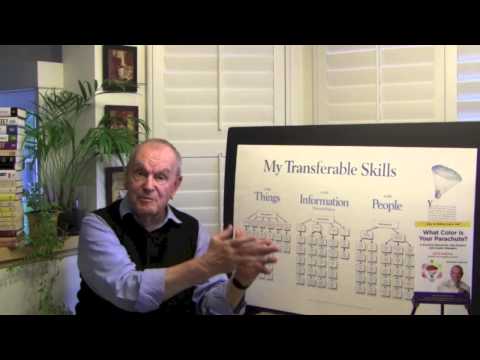 Books, Career, Ordinary World
Don't Waste Your Life – What Color Is Your Parachute – Finding Your Mission In Life
One week spent doing the exercises in this book can literally save 5, 10, 20, 30 years of getting the wrong degree and wasted student loans. Find your mission.